
You’ll want a trail camera that combines high-resolution imaging, reliable night vision, and extended battery life to capture wildlife behavior without constant maintenance visits. Look for models with 64MP sensors and infrared night vision reaching 65+ feet for nocturnal monitoring. Solar-equipped options reduce battery replacement frequency, while WiFi or cellular connectivity enables remote smartphone access. Durability ratings like IP66 waterproofing and trigger speeds under 0.1 seconds guarantee consistent performance. The right choice balances your budget with specific monitoring needs and environmental conditions.
| KJK Trail Camera 36MP 2.7K Night Vision Hunting |  | Best Night Vision | Photo Resolution: 36MP | Night Vision Range: 75ft with 850nm infrared | Trigger Speed: Less than 0.1 seconds | VIEW LATEST PRICE | Read Our Analysis |
| MAXDONE Solar Trail Camera 4K 64MP WiFi Bluetooth |  | Best Smart Features | Photo Resolution: 64MP | Night Vision Range: 65ft with infrared technology | Trigger Speed: 0.1 seconds | VIEW LATEST PRICE | Read Our Analysis |
| Mini Trail Camera 4 Pack 24MP HD Waterproof |  | Best Value Pack | Photo Resolution: 24MP | Night Vision Range: Black and white nighttime capture | Trigger Speed: 0.3 seconds | VIEW LATEST PRICE | Read Our Analysis |
| SPYPOINT Flex-M Twin Pack Cellular Trail Cameras |  | Best Connectivity | Photo Resolution: 28MP | Night Vision Range: Not specified | Trigger Speed: Not specified | VIEW LATEST PRICE | Read Our Analysis |
| GardePro E5S Trail Camera 64MP HD Video Night Vision | 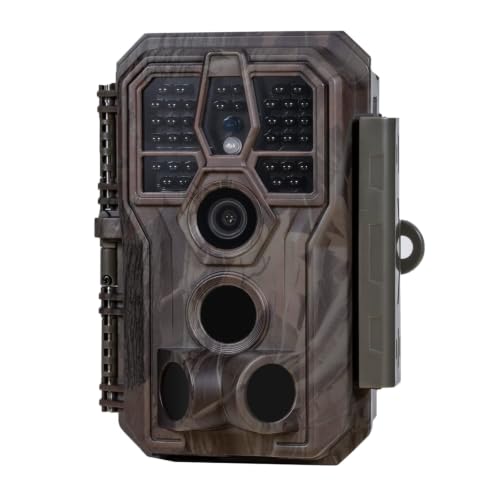 | Best Overall | Photo Resolution: 64MP | Night Vision Range: Not specified | Trigger Speed: 0.1 seconds | VIEW LATEST PRICE | Read Our Analysis |
More Details on Our Top Picks
KJK Trail Camera 36MP 2.7K Night Vision Hunting
If you’re serious about capturing wildlife in stunning detail, the KJK Trail Camera’s 36MP still images and 2.7K video won’t disappoint. You’ll get crystal-clear footage day and night thanks to its 22 low-glow infrared LEDs and 850nm infrared technology that reaches 75 feet in darkness. The camera’s trigger speed clocks in under 0.1 seconds, so you won’t miss a moment. Its 130° detection angle covers vast terrain, while adaptive illumination prevents overexposure. Setup’s effortless with the built-in 2.0″ screen—no Wi-Fi or apps needed. You’ll appreciate the IP66 waterproof rating and impressive 17,000-image battery life, making it reliable for year-round outdoor use.
- Photo Resolution:36MP
- Night Vision Range:75ft with 850nm infrared
- Trigger Speed:Less than 0.1 seconds
- Weather Resistance:IP66 waterproof, -22°F to 158°F
- Motion Detection:130° wide-angle detection
- Connectivity:No WiFi/SIM required
- Additional Feature:No WiFi/SIM card required
- Additional Feature:17,000 image battery life
- Additional Feature:Built-in 2.0″ HD color screen
MAXDONE Solar Trail Camera 4K 64MP WiFi Bluetooth
The MAXDONE Solar Trail Camera excels for wildlife watchers who demand both reliability and convenience in remote monitoring. Its 64MP sensor captures stunning 4K imagery with exceptional low-light performance, catching fast-moving subjects within 0.1 seconds. The detachable solar panel combined with a 6000mAh battery and multi-charging options guarantees extended deployment without frequent maintenance. You’ll control everything through the TrailCamGO app via WiFi or Bluetooth up to 55 feet away, viewing images directly on your smartphone. Infrared night vision reaches 65 feet, while the IP66 waterproof rating withstands harsh weather. Time-lapse, motion detection, and customizable timestamps give you complete monitoring flexibility for serious wildlife observation.
- Photo Resolution:64MP
- Night Vision Range:65ft with infrared technology
- Trigger Speed:0.1 seconds
- Weather Resistance:IP66 waterproof
- Motion Detection:Customizable detection zones
- Connectivity:WiFi and Bluetooth via TrailCamGO app
- Additional Feature:Detachable adjustable solar panel
- Additional Feature:Direct smartphone image transmission
- Additional Feature:Customizable detection zones
Mini Trail Camera 4 Pack 24MP HD Waterproof
Wildlife enthusiasts seeking affordability without sacrificing quality won’t find better value than this four-pack bundle. You’ll capture 24MP photos and 1080P videos with impressive detail, switching seamlessly between color daytime and black-and-white nighttime modes. The 0.3-second trigger speed guarantees you won’t miss critical moments, even in low light. Each camera runs on just four AA batteries, providing extended standby time that reduces replacement frequency. The camouflaged design keeps cameras hidden from wildlife and trespassers alike. You’ll appreciate the included accessories: four 32GB SD cards and sixteen AA batteries, making setup immediate and monitoring accessible for security, wildlife tracking, and farm protection.
- Photo Resolution:24MP
- Night Vision Range:Black and white nighttime capture
- Trigger Speed:0.3 seconds
- Weather Resistance:Waterproof
- Motion Detection:Standard motion detection
- Connectivity:SD card only
- Additional Feature:Four-pack bundle included
- Additional Feature:Camouflage appearance design
- Additional Feature:Includes 16 AA batteries
SPYPOINT Flex-M Twin Pack Cellular Trail Cameras
You’ll appreciate the SPYPOINT Flex-M Twin Pack if you’re serious about monitoring wildlife without breaking the bank on connectivity fees. This dual-camera system delivers 28MP photos and 720p videos with sound, ideal for thorough property coverage. You get the industry’s only free photo transmission plan—up to 100 monthly images at zero cost. Paid plans start at just $5 for 250 photos or $15 for unlimited access. The cross-carrier connectivity guarantees reliable operation across varied terrain, while Constant Capture technology lets you transmit and capture simultaneously. The intuitive SPYPOINT app grants instant smartphone access anywhere, and BUCK TRACKER AI automatically filters species sightings.
- Photo Resolution:28MP
- Night Vision Range:Not specified
- Trigger Speed:Not specified
- Weather Resistance:Not specified
- Motion Detection:Standard motion detection
- Connectivity:Cellular with SPYPOINT app
- Additional Feature:Free 100 photos monthly plan
- Additional Feature:BUCK TRACKER AI species filtering
- Additional Feature:Constant Capture technology simultaneous operation
GardePro E5S Trail Camera 64MP HD Video Night Vision
If you’re hunting fast-moving game or monitoring wildlife in remote locations, the GardePro E5S delivers professional-grade results without the complexity of cellular or WiFi connectivity. Its 64MP photos and 1296P HD video capture stunning detail, while three PIR sensors enable lightning-fast 0.1-second trigger speeds. You’ll appreciate the extended battery life from eight AA batteries, with optional solar panel support for continuous operation. The IP66 waterproof rating guarantees durability in harsh conditions, and the 1/4-20 mounting thread adapts to any location. Simply retrieve the SD card to review footage—no subscriptions or complicated setup required.
- Photo Resolution:64MP
- Night Vision Range:Not specified
- Trigger Speed:0.1 seconds
- Weather Resistance:IP66 waterproof
- Motion Detection:Three PIR sensors
- Connectivity:SD card only
- Additional Feature:Solar panel expansion compatible
- Additional Feature:Three PIR sensors technology
- Additional Feature:1/4-20 universal mounting thread
Factors to Consider When Choosing Trail Cameras
When you’re selecting a trail camera, you’ll want to evaluate image quality resolution to capture clear wildlife details, assess night vision performance for low-light situations, and check battery life duration to guarantee uninterrupted monitoring. Consider the connectivity options available—whether you need Wi-Fi, cellular, or cloud integration—based on your specific location and data access needs. Finally, verify the weather durability rating to validate your camera can withstand your region’s environmental conditions.
Image Quality Resolution
Clear, detailed images are essential for effective wildlife monitoring, which is why image quality resolution ranks among the most critical factors in choosing a trail camera. You’ll want to prioritize cameras with higher megapixel counts—a 36MP camera captures considerably more detail than a 24MP model, giving you clearer perceptions into animal behavior and identification. Video resolution matters equally; you should seek cameras offering 4K capabilities rather than settling for standard 720p. In low-light conditions, you’ll benefit from advanced sensors and infrared technology that enhance nighttime captures and improve contrast in dark environments. Quality optical lenses and noise reduction features further boost your imaging performance, ensuring thorough wildlife observation and accurate monitoring across all lighting conditions.
Night Vision Performance
While high-resolution daytime imaging captures wildlife behavior in detail, you’ll also need strong night vision capabilities to monitor nocturnal activity effectively. Infrared technology enables your camera to capture clear images up to 75 feet in complete darkness, making it vital for tracking after-hours wildlife movement.
Look for upgraded infrared wavelengths like 850nm combined with adaptive illumination technology. These features prevent overexposure and dimming, providing consistent nighttime footage quality. A high-resolution sensor paired with an advanced optical lens guarantees detailed night captures.
Don’t overlook trigger speed either. Fast response times—as low as 0.1 seconds—are essential for recording quick nocturnal movements accurately. Consider your camera’s specific low-light range, typically between 65 to 75 feet, depending on the model. This distance directly impacts your monitoring effectiveness.
Battery Life Duration
Battery life duration is one of the most critical specifications you’ll evaluate when selecting a trail camera, as it directly determines how often you’ll need to visit your monitoring sites for maintenance. Some models capture up to 17,000 images before requiring a battery change, markedly reducing your workload.
You’ll want to examine the power source carefully. Cameras using multiple AA batteries typically offer extended standby time compared to single-use alternatives. Solar-powered options further enhance longevity by utilizing renewable energy, minimizing traditional battery replacements entirely.
Your usage patterns matter too. Higher image resolution and frequent capture intervals drain power faster, so you’ll need to balance quality with energy efficiency based on your monitoring needs.
Connectivity Options Available
As your monitoring needs evolve, you’ll find that connectivity features can dramatically simplify how you access and manage trail camera data. WiFi-enabled models connect to apps for real-time viewing, eliminating frequent trips to retrieve your camera. Cellular cameras take convenience further, offering subscription plans that transmit photos directly to your device—no SD card retrieval necessary. Bluetooth connectivity lets you adjust settings and transfer images when you’re near the camera. If you prefer simplicity and lower costs, non-connected cameras still deliver reliable performance using SD cards for storage, though they require manual data access. Your choice depends on whether you prioritize remote monitoring capabilities or straightforward, maintenance-free operation.
Weather Durability Rating
If you’re planning to leave your camera outdoors for extended periods, you’ll need to prioritize weather durability. Look for an IP66 or IP67 rating, which guarantees complete dust protection and resistance to powerful water jets—essential for unpredictable weather conditions.
Temperature specifications matter equally. Choose cameras with operational ranges like -22°F to 158°F to guarantee reliable performance year-round, whether you’re monitoring during harsh winters or sweltering summers.
Don’t overlook construction materials either. Sturdy designs withstand drops, impacts, and UV exposure without degradation, extending your camera’s lifespan considerably. A durable trail camera maintains functionality across diverse outdoor environments, protecting your investment and ensuring consistent wildlife monitoring regardless of seasonal changes or extreme conditions you’ll encounter.
Trigger Speed Response
While a weather-resistant camera protects your equipment, it won’t help you capture wildlife if it can’t respond fast enough to movement. Trigger speed—the time between motion detection and image capture—is critical for wildlife photography. You’ll want cameras with trigger speeds under 0.1 seconds, which respond almost instantaneously to animal movement. This guarantees you don’t miss fast-passing subjects or sudden environmental changes.
Pair your camera’s trigger speed with a wide detection angle for extensive coverage. You’ll capture multiple viewpoints of movement across your observation area. Additionally, choose models offering adjustable shot settings, typically one to three photos per trigger. This flexibility helps you secure quality images despite varying lighting conditions and unpredictable animal behavior, greatly improving your chances of documenting successful wildlife moments.
Price Value Comparison
Balancing cost against features requires you to evaluate several key factors before investing in a trail camera. You’ll want to examine image resolution—64MP cameras deliver superior detail compared to 24MP or 36MP models, justifying higher upfront costs. Consider power sources carefully; solar-equipped cameras reduce long-term battery replacement expenses considerably. Assess whether advanced features like cellular connectivity and smartphone integration align with your needs and budget. You should also evaluate durability ratings such as IP66 waterproofing, which prevents costly replacements from weather damage. Finally, examine what accessories come included. SD cards and batteries bundled with your purchase offset initial expenses and guarantee you’re ready to deploy immediately. These factors combined determine genuine value, not just price.
Frequently Asked Questions
How Long Do Trail Camera Batteries Typically Last in Cold Weather Conditions?
You’ll typically find that your trail camera batteries last 30-50% shorter in cold weather compared to mild conditions. Cold temperatures considerably reduce battery efficiency, especially with alkaline batteries. You should expect 2-4 months of operation instead of the standard 4-8 months. To maximize performance, you’ve got several options: use lithium batteries, which tolerate cold better, install your camera in sheltered spots, or swap batteries more frequently during winter months.
What Is the Difference Between Passive Infrared and Active Infrared Night Vision?
You’ll find that passive infrared (PIR) detects heat emitted by animals, requiring no light source and consuming minimal battery power. Active infrared, however, you’ll operate by projecting invisible light and capturing its reflection. You’d prefer passive infrared for wildlife photography since it’s stealthier and won’t alert animals. Active infrared gives you clearer images but uses more energy. You’ll choose based on your priorities: battery life and stealth versus image quality and visibility range.
Can Trail Cameras Be Used Legally on Public Land or National Parks?
You can use trail cameras on public land, but you’ll need to check specific regulations first. Many national parks prohibit them entirely without permits, while some allow them for personal wildlife observation only. You’re responsible for understanding local rules—they vary greatly. Always get written permission before installing cameras on federal or state property. You’ll find that private land offers fewer restrictions, making it your best option for unrestricted trail camera use.
How Do I Prevent Wildlife From Damaging or Stealing My Trail Camera?
You’ll want to secure your camera firmly to trees or posts using heavy-duty locks and cables that animals can’t chew through. Mount it high enough that curious wildlife can’t easily reach it. You should also use camouflage covers to reduce its visibility and appeal. Install it away from food sources and hiking trails where disturbance occurs. Consider motion-activated lights or audio deterrents nearby. Check your setup regularly and use sturdy metal enclosures for added protection against determined animals.
What File Formats Do Trail Cameras Use and Are They Compatible With Computers?
You’ll typically find that modern trail cameras capture photos in JPEG format and videos in AVI or MP4 formats. These’re widely compatible with most computers, allowing you to easily transfer and view files on Windows or Mac systems without special software. You can simply plug your camera’s SD card into your computer’s card reader, then open files with standard media players or photo viewers. This compatibility makes reviewing your wildlife footage straightforward and hassle-free.

Leave a Reply