
You’ll want hiking leggings that excel in moisture-wicking to keep sweat at bay and high-compression fabric to support your muscles on challenging ground. Look for strategically placed pockets so you’re not juggling essentials, plus built-in UV protection shielding your legs from sun damage. The fit should allow unrestricted movement across varied environments without compromising support. You’ll find exactly which features matter most when you investigate our detailed breakdown of what changes good leggings into trail favorites.
| Eddie Bauer Women’s Trail Tight High-Rise Leggings | 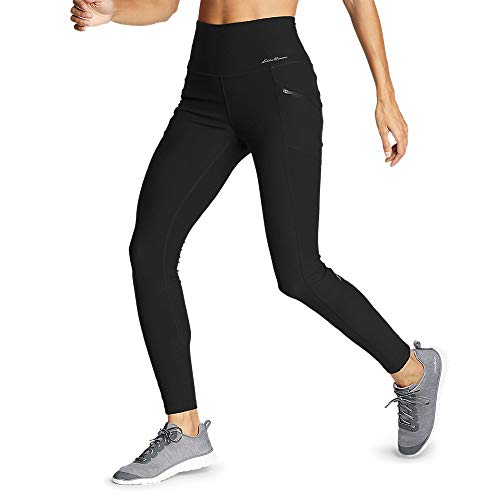 | Most Versatile | Fit Style: High-Rise | Compression Level: High-Compression | Primary Material: Polyester | VIEW LATEST PRICE | Read Our Analysis |
More Details on Our Top Picks
Eddie Bauer Women’s Trail Tight High-Rise Leggings
If you’re searching for leggings that won’t compromise on practicality, Eddie Bauer’s Trail Tight High-Rise design delivers functional pockets—spacious enough to hold your phone—without sacrificing a streamlined silhouette. The invisible zippers maintain that clean aesthetic while providing convenient access. Constructed from moisture-wicking polyester, these leggings keep you dry during intense hikes and workouts. Built-in sun protection shields your skin from UV rays on exposed trails. The high-compression fabric supports your muscles during demanding activities, whether you’re tackling challenging terrain or flowing through yoga sequences. You’ll appreciate the versatility these leggings offer, performing equally well on mountain trails and in studio environments. Designed for all-day comfort, they’re your reliable companion for outdoor excursions and fitness pursuits.
- Fit Style:High-Rise
- Compression Level:High-Compression
- Primary Material:Polyester
- Moisture Management:Moisture-Wicking
- Sun Protection:Integrated
- Pocket Design:Phone-Sized with Invisible Zippers
- Additional Feature:Invisible zippers for streamlined look
- Additional Feature:Phone-sized pocket capacity
- Additional Feature:High-rise waistband design
Factors to Consider When Choosing Leggings for Hiking
When you’re shopping for hiking leggings, you’ll want to prioritize fabric with strong moisture-wicking properties to keep sweat away from your skin during strenuous trails. Pay attention to compression level and support, pocket placement for storing essentials, and whether the leggings offer sun protection features that shield your legs from UV rays. Finally, make sure the fit allows a full range of motion so you can move freely without restriction on steep inclines or technical terrain.
Fabric Moisture-Wicking Properties
Three critical factors make moisture-wicking fabrics essential for hiking leggings: they pull sweat away from your skin, they dry quickly, and they keep you comfortable throughout your trek. Most quality hiking leggings blend polyester or nylon, materials with hydrophobic properties that repel moisture and accelerate evaporation.
When you’re tackling steep trails, these fabrics regulate your body temperature by preventing sweat buildup, which matters whether you’re hiking in scorching heat or cool mountain air. The enhanced breathability allows air circulation around your legs, reducing that clammy feeling that derails your enjoyment.
Perhaps most importantly, moisture-wicking leggings minimize chafing and skin irritation. Damp fabric rubbing against your skin during long hikes causes discomfort and potential damage. By keeping you genuinely dry, quality moisture-wicking leggings let you focus on the trail ahead.
Compression Level And Support
Compression level in your hiking leggings directly impacts how your muscles perform on the trail. High-compression materials enhance blood circulation, keeping your legs energized throughout longer hikes and potentially enhancing overall performance. Targeted compression zones support key muscle groups, greatly reducing strain and injury risk during strenuous activity.
However, you’ll want to strike the right balance. Overly tight compression restricts movement and creates discomfort, undermining your hiking experience. Instead, choose leggings that fit snugly yet comfortably, allowing full range of motion without feeling constricted.
When combined with moisture-wicking fabrics, compression technology regulates body temperature effectively during physical exertion. This dual functionality keeps you comfortable and focused on the trail ahead. Prioritize leggings offering both adequate support and unrestricted movement for peak hiking performance.
Pocket Placement And Storage
Beyond the support your leggings provide, you’ll want to contemplate how you’ll carry your essentials on the trail. Strategically placed pockets make all the difference when hiking, allowing you to access your phone, keys, or map without breaking stride.
Look for hip or thigh pockets that offer easy reach while maintaining a streamlined silhouette. Secure closures—zippers or flaps—prevent items from falling out during challenging terrain and vigorous movement. The pocket design shouldn’t interfere with your natural range of motion or comfort; well-engineered leggings balance functionality seamlessly.
Size matters too. Your pockets need sufficient capacity to hold essentials without creating bulges or throwing off your fit. When pocket placement and design align with your leggings’ overall aesthetic, you’ll achieve both practical storage and a cohesive outdoor look.
Sun Protection Features
You’ll want to prioritize leggings with integrated UPF ratings that shield your skin from harmful UV rays during extended trail time. Moisture-wicking fabrics amplify this protection by managing sweat while blocking UV damage, making them ideal for warm-weather hikes.
Fabric density plays a fundamental role in sun protection—thicker materials provide superior UV blocking and coverage. Look for leggings combining breathability with sun protection to maintain comfort during prolonged outdoor exposure in sunny conditions.
Design elements matter too. Longer leg lengths and built-in sun shields offer additional coverage against harmful rays. Prioritizing these features guarantees your legs stay protected and comfortable, allowing you to focus on enjoying your hike rather than worrying about sun damage.
Fit And Range Motion
While sun protection keeps your skin safe from UV damage, the fit and range of motion in your hiking leggings determine whether you can actually move comfortably on the trail. You’ll want leggings that hug your body without restricting movement, allowing you to squat, lunge, and reach freely. Look for high-compression fabrics blended with spandex or elastane that support your muscles while maintaining flexibility. Higher-rise designs prevent slipping during intense activity, keeping you focused on the terrain ahead. Before purchasing, test the leggings by performing common hiking motions—bending, reaching, and climbing movements. This guarantees they won’t dig in, bunch up, or limit your stride. Prioritizing proper fit means you’ll move confidently and comfortably throughout your entire hike.
Durability For Trail Conditions
Since trail conditions can be harsh and unpredictable, your hiking leggings need materials that won’t fall apart after a few outings. Look for durable fabrics like moisture-wicking polyester or nylon that resist abrasion and weather exposure. High-compression materials provide essential support while maintaining shape through demanding terrain.
Reinforced stitching and strong seams are critical—they endure constant movement stress and contact with natural elements. You’ll appreciate secure zippered pockets too; they minimize wear from loose items bouncing against the fabric during hikes.
Don’t overlook sun protection technology either. It shields your skin from UV rays during extended exposure in open areas while adding another protective layer to your leggings’ functionality. These durability features guarantee your investment withstands countless trail experiences.
Frequently Asked Questions
What Is the Difference Between Hiking Leggings and Regular Workout Leggings?
You’ll find that hiking leggings offer enhanced durability with reinforced fabrics designed to withstand rough terrain and brush. They’re built with specific features like higher waistbands for stability on uneven ground and often include pockets for essentials. You’ll also get superior moisture-wicking and breathability customized for extended outdoor activity. Regular workout leggings focus more on flexibility and comfort for gym environments, while hiking leggings prioritize protection, functionality, and endurance for challenging trails.
How Do I Properly Care for and Wash My Hiking Leggings?
You’ll want to turn your leggings inside out before washing them in cold water on a gentle cycle. Use mild detergent and skip the fabric softener, which can damage moisture-wicking properties. You shouldn’t use bleach or high heat. Air dry them flat or hang them—don’t throw them in the dryer. Wash them after every few wears to maintain their performance and extend their lifespan considerably.
Are Hiking Leggings Appropriate for All Seasons and Weather Conditions?
You’ll find that hiking leggings work best during spring, summer, and fall. However, they’re not ideal for extreme winter conditions where you’ll need insulated, thermal layers instead. You can wear lightweight leggings in hot weather, but you’ll want moisture-wicking fabrics that dry quickly. For rainy seasons, you’ll benefit from water-resistant options. Consider layering your leggings under shorts during unpredictable weather. They’re versatile, but you’ll maximize comfort by matching them to seasonal demands.
Can Hiking Leggings Provide Sun Protection During Extended Outdoor Activities?
Yes, you’ll find that many hiking leggings offer excellent sun protection during extended outdoor activities. You should look for leggings with UPF (Ultraviolet Protection Factor) ratings, which block harmful UV rays effectively. You’re getting added defense when you choose darker colors and tightly-woven fabrics. However, you shouldn’t rely solely on leggings for sun safety—you’ll want to combine them with sunscreen on exposed skin, a hat, and sunglasses for thorough protection during long hikes.
What Size Should I Choose if I’m Between Two Legging Sizes?
You’ll want to size up if you’re between two sizes. Going larger guarantees you won’t experience uncomfortable compression or restriction during hiking. You’ll appreciate the extra room for layering and movement on the trail. Plus, you won’t deal with binding at the waistband or thighs. Most quality hiking leggings have drawstrings or adjustable waists, so you can customize the fit perfectly. You’ll be glad you prioritized comfort over a tighter fit.

Leave a Reply